In this article
PATCHES
A patch is a small piece of cloth with stitches on it, plus a way to attach it. If you skip the cloth and stitch into stabilizer alone, you did not make a cheaper patch. You made a floppy one.
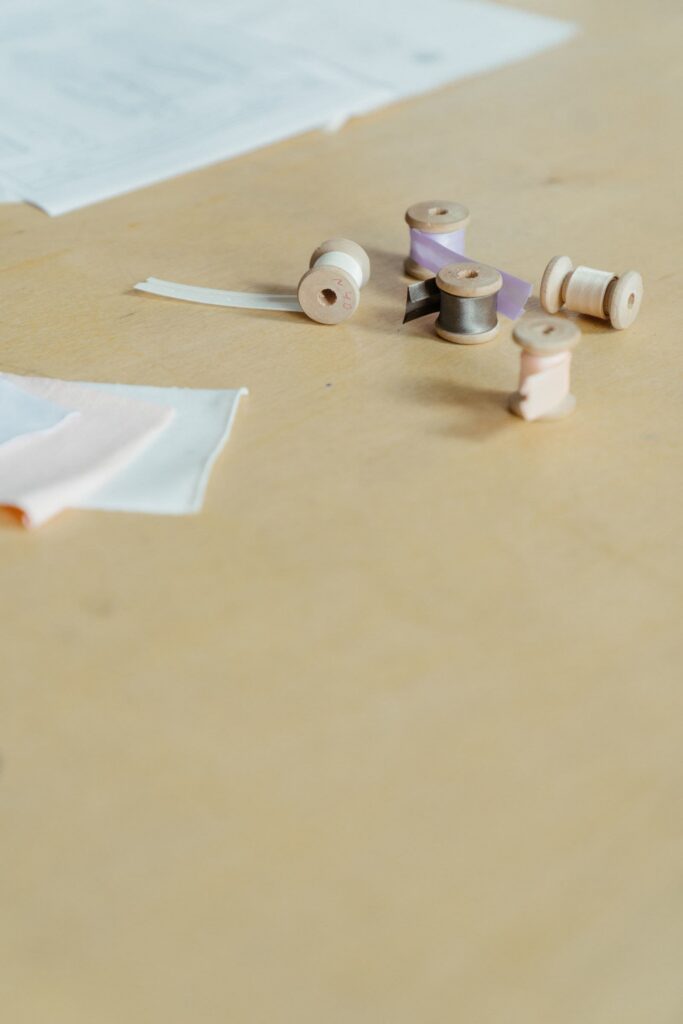
Example photo, not patch twill, felt, or Velcro. Thread and cloth on a bench. Photo by cottonbro studio on Pexels.
Twill is not one thing
Clothing twill, the kind used for chinos and aprons, is often too light. The patch feels thin and the edge frays when you cut close. Tackle twill and the heavier poly or poly-cotton patch twills are the ones that hold a shape. A shinier poly twill reads sporty. A poly-cotton reads quieter. Neither one is a substitute for a layer of cutaway if the twill itself is light.
Felt is the easy hobby backing because it does not fray and it cuts clean. It also looks like felt. That is fine for a jacket patch you want soft, and wrong for a customer who asked for a merrowed uniform badge. Say which one you are selling.
What happens when stabilizer pretends to be fabric
Two layers of tearaway with a badge film on top will sew. After a wash, or just after a month of flexing, the tearaway does its job and lets go. The stitches loosen. They may not unravel. They just look tired. Cutaway behind a real fabric is the combination that keeps showing up when people compare notes, because the patch is still a patch later.
Heat-seal film is an attachment, not a body. It needs something stable to stick to. If the thing it sticks to is tearaway, the adhesive fails when the tearaway fails. That is the same failure as a patch that survived the sew-out and died in the dryer, which is what the wash article is for.
Velcro, peel-and-stick, and sew-on
Velcro is for things that come off: morale patches, bags, a panel the customer wants to swap. The hook side is stiff. Do not put it on a thin tee and act surprised. Peel-and-stick is for a display piece or a one-day event. It is not a wash method. Sew-on, either by the customer or as a finished edge they can stitch down, is the one that survives laundry.
If you sell iron-on, tell them the garment and the heat. A low-temp synthetic and a cotton drill do not take the same iron. The backing can be perfect and the bond still fail because the instructions were a shrug.
Cutting without ruining the border
- Pre-cut the fabric and float it, or run a placement stitch and trim in the hoop before the border, so you are not shaving the satin afterward.
- A hot knife along a cotton border on poly-cotton twill melts the cloth and leaves the cotton thread. Poly thread in that border melts with the cloth. That is a thread choice, not a steady hand.
- Leave a hair of fabric if you are cutting cold, rather than biting the satin and calling it a second.
Questions that come up at the machine
Can I stitch the patch with no fabric, only stabilizer?
You can. It will look loose after it flexes. Fabric is the structure.
Is felt good enough to sell?
Yes, if you sell it as felt. It is a different product from a twill badge.
Why did the iron-on release?
The film was on tearaway, the heat was wrong for the garment, or the patch was washed like a sew-on.

Founder of Plan & Make. Writes about embroidery production, patches and digitizing. Every guide is reviewed against real production constraints.
About Plan & Make →PUT IT INTO PRACTICE
Turn your artwork into a sew-ready file.
Upload a clean logo, check the front preview and download DST, PES, JEF, EXP, VP3 or XXX.
Open StitchForge →