In this article
PATCHES
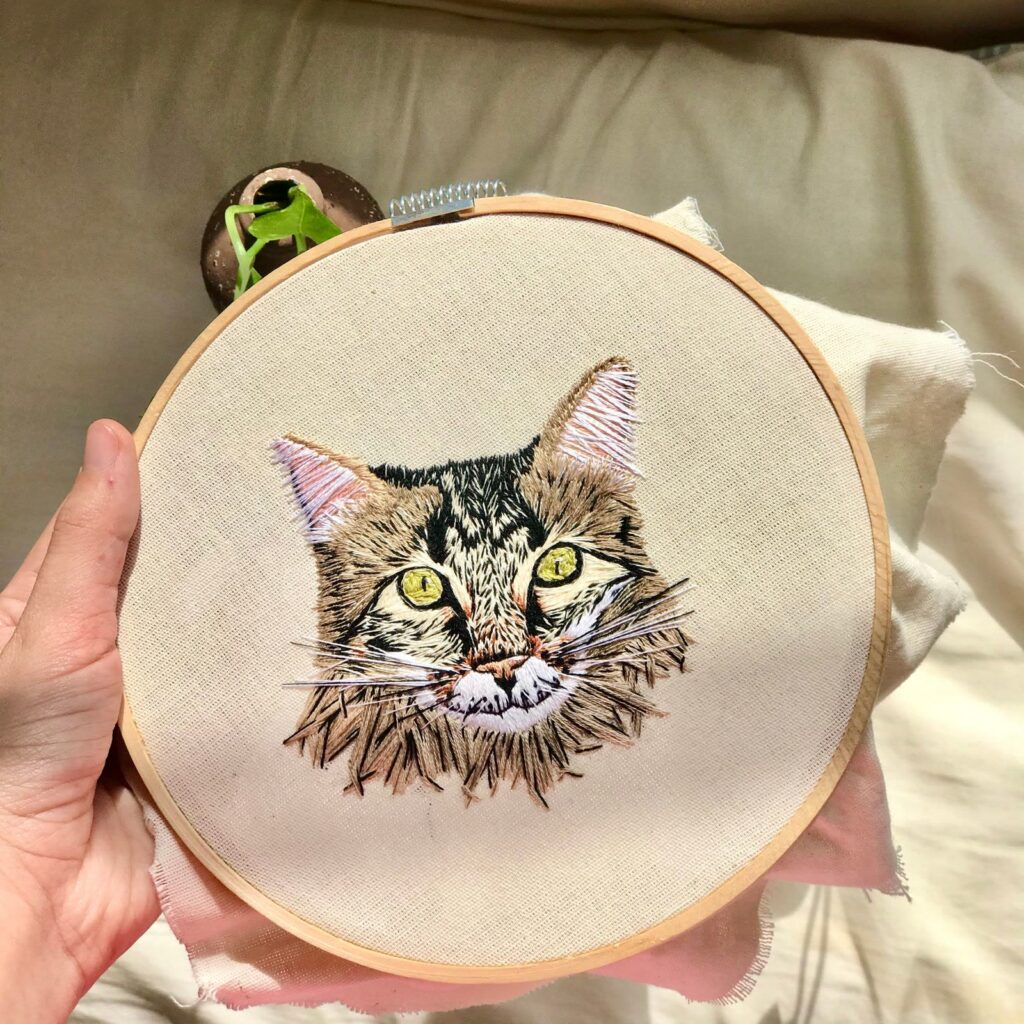
Stitch count is not a quality score. A 75 mm patch with a dense photograph-style fill will sew, and then it will curl, feel like a coin, and tear the stabilizer on the way out of the hoop. The limit is the hand and the edge, not the number on the screen.
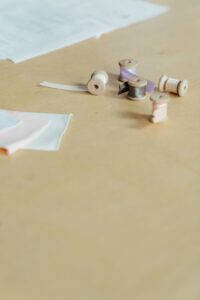
Example photo, not a 75 mm patch. A design with a lot of fine stitching. Photo by Marina Meyer on Pexels.
What heavy actually feels like
Pick the patch up. If it does not bend over a finger, it is a badge for a jacket at best and a problem on a cap or a tee. High count comes from tiny detail you tried to sew in thread: gradients, hairlines, a paragraph, a photo. Thread covers area by lying next to thread. It does not make dots the way a printer does.
When the count climbs, three things happen together. The patch cups because the stitches shrink the cloth. The border, sewn last, lands on a surface that has already moved. And the needle heats up and starts breaking thread in the same spot, which feels like a mystery tension problem.
What to delete before you touch density
Read the artwork checklist and actually delete. Gradients become two or three flat colors. Text under 4 mm becomes fewer words at a taller size, or it leaves the patch and goes on a printed layer. Fine inner detail becomes a hole in the fill, not another color stop.
Then open the spacing. A fill packed tight enough to look like print will pucker a patch and a shirt. Shops that fight puckering on small goods often open the spacing until the fill still covers and the cloth still lies down. Covering is the goal. A solid plastic disc is not.
The border tells on you
If the satin border is the stiffest part, the patch will cup toward the back or the front depending on density and backing. A wider border on a too-heavy fill makes it worse. Fix the fill first. The border is structure, which is the point of satin versus merrow, but it cannot iron out a fill that already shrank the middle.
Sew one patch. Bend it. Wash it if it is going on a garment. If you would not want it on your own jacket, do not ship the other forty-nine.
A sane ceiling, without a magic number
- If thread breaks in the same dense corner, the file is too heavy or the needle is too small for that spot. Simplify before you blame the cone.
- If the patch curls on the table, it will curl worse after a wash.
- If you cannot name which shapes are satin and which are fill, the auto tool decided for you. Undo that.
- Price the difficulty. A dense 75 mm patch is not the same job as an open one. The pricing note is about time, and this is where the time goes.
Questions that come up at the machine
Is there a correct stitch count for 75 mm?
No. An open lettermark and a full-bleed fill are different objects that happen to share a diameter.
Will another layer of stabilizer stop the curl?
It hides a light curl. It will not save a photo-real fill.
Should I slow the machine down instead?
Slowing down saves thread breaks. It does not make a heavy patch soft.

Founder of Plan & Make. Writes about embroidery production, patches and digitizing. Every guide is reviewed against real production constraints.
About Plan & Make →PUT IT INTO PRACTICE
Turn your artwork into a sew-ready file.
Upload a clean logo, check the front preview and download DST, PES, JEF, EXP, VP3 or XXX.
Open StitchForge →