In this article
HAND STITCH
A machine satin border is one way to finish a patch. Blanket stitch is the hand way: a row of threads that sit over the cut edge and stop it fraying, with the legs spaced so the edge looks drawn, not scribbled.
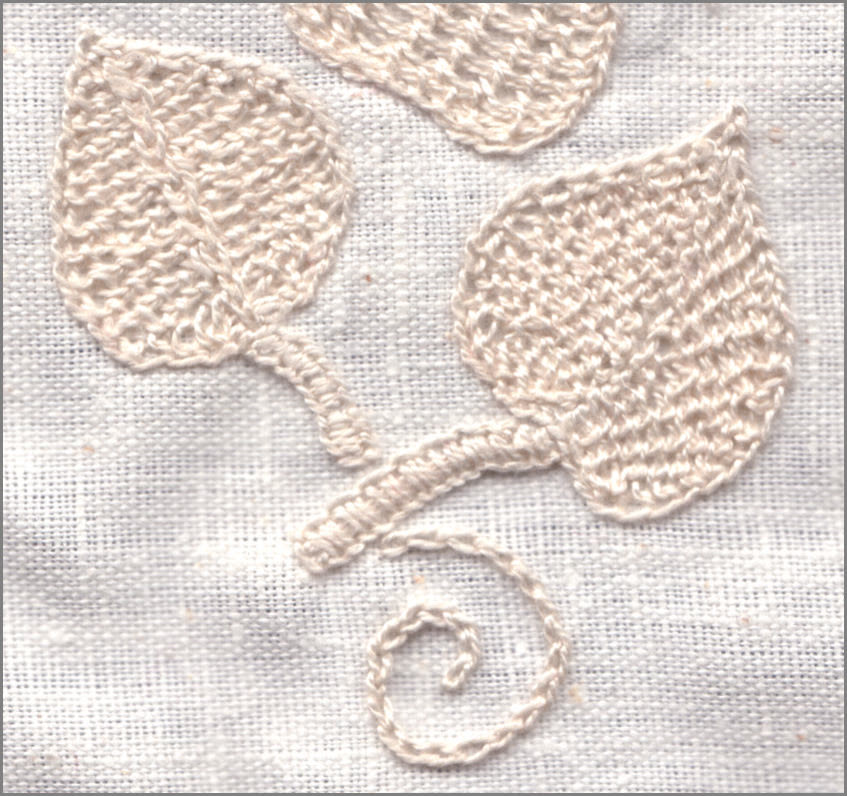
Buttonhole stitch, the tight form of blanket stitch, by PKM, CC BY 3.0, via Wikimedia Commons. This shows the stitch family, not a finished patch edge.
How the stitch sits on the edge
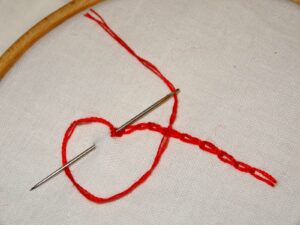
Work with the edge toward you. Come up through the back, a consistent distance in from the cut. The thread comes from the previous stitch and lies along the edge. Go down through the same hole you just came up from, or a thread’s width beside it, and come up again one step along, with the needle passing over the loop so the thread catches the edge. The bar lies on the rim. The leg goes into the cloth.
That sounds fussy written down. In the hand it is: forward along the edge, catch the loop, keep the leg the same depth. If the legs wander deeper and shallower, the border looks drunk. Mark a pencil line if you need it. Pencil beats pride.
Spacing is the whole design
Spaces about the same as the depth of the leg read as a border. Wider spaces read as a dashed whip and the fabric frays between them. Overlapping legs read as a tangle. On felt you can space a little wider because felt does not unravel. On a woven or a light twill, stay closer, or the edge will fuzz out between stitches and undo the point.
Corners need a stitch that shares the corner hole, or two legs into the corner, so the turn does not leave a bald spot. A bald corner is where a patch starts to fray in a bag.
Thread and when not to bother
Two or three strands on a small felt patch. Heavier thread, or more strands, on a jacket patch you want to see from the other side of a room. Match the thread to the job. A shiny rayon on a wool felt patch looks like it escaped from a machine cone.
If the patch is going through a washer on a sleeve, blanket stitch is a finish for the edge, not a miracle. The wash survival still depends on the cloth and how the patch is sewn onto the garment. A pretty edge on a loose iron-on will leave with the first hot cycle.
And if you wanted a corded machine border, do not pretend blanket stitch is merrow. Sell it as a hand edge. People who want that will like it more than a stiff satin.
Questions that come up with the needle
My bars are slanting. What did I do?
You pulled along the edge before the loop settled. Snug the bar perpendicular to the edge, then travel forward.
The edge still frays.
The stitches are too far apart for that cloth, or the legs are so shallow they are not holding any yarns.
Is this the same as buttonhole stitch?
Same family. Buttonhole is often sewn tighter, because a buttonhole takes real wear. For a patch edge, even spacing matters more than sewing them packed solid.

Founder of Plan & Make. Writes about embroidery production, patches and digitizing. Every guide is reviewed against real production constraints.
About Plan & Make →PUT IT INTO PRACTICE
Turn your artwork into a sew-ready file.
Upload a clean logo, check the front preview and download DST, PES, JEF, EXP, VP3 or XXX.
Open StitchForge →